Blog Posts

Blog Posts

Uncover the Purpose of the Unutilized Button on Your Vehicle’s Rear View Mirror

The USB port of your vehicle can accomplish more than you realize; these buttons may also fulfill various functions depending on your car’s make, model, and year.

You might notice an auto-dimming button instead of a manual control on your rear-view mirror. Usually, you will press it to switch it off or on, accompanied by a light indicator to inform you when it is active. When engaged, it automatically modifies your rear-view mirror based on headlight glare from behind the vehicle. This facilitates better visibility and allows you to maintain a grip on the wheel for safer driving.

Nonetheless, some vehicles have one or several additional buttons that activate various features. This can vary greatly depending on your specific vehicle, as they are not as standardized as dimming the rear-view mirror. Features can include connecting to a home system, calling for assistance in emergencies, and more.

Rear view mirror buttons on specific brands

Potentially Limited Apple Products in 2026

shipping holdups when a new iPhone launches, products typically stabilize in availability quite swiftly. This benefits Apple’s financials as it minimizes the risk of overproduction for any particular device, thereby avoiding a situation where devices languish unsold. By maintaining a limited inventory, Apple manages to keep prices from plummeting too significantly while also enhancing the perception of strong demand for its products.

This partially clarifies why certain items become exceedingly scarce following Apple’s discontinuation of a product or the launch of a new model of an existing product. Given that the current stock is already low, it often sells out rapidly once a newer model is introduced.

At times, it is straightforward to predict when an item will become difficult to find. In some situations, Apple gradually reduces production in the months preceding a discontinuation. In other instances, forecasting which items will be scarce is easy due to established upgrade patterns. For instance, it was hardly unexpected that the iPhone 16 became scarce when the iPhone 17 was unveiled. With this in mind and considering the speculated upcoming product launches, here are several items that might be challenging to locate in 2026.

iPhone 16e

The Function of Cameras on Traffic Signals Goes Further Than Just Snaring Red-Light Offenders

add a fourth signal light for robotaxis. Vehicle sensors may also prove advantageous for examining car collisions and various criminal acts if utilized as a monitoring system.

Certain cameras positioned atop traffic signals are, in fact, utilized for law enforcement concerning traffic. These cameras activate when a vehicle disregards a red light, recording the vehicle’s behavior and license plate details through video or photos. Nonetheless, they are not necessarily present at every intersection, as these devices tend to concentrate on high-traffic regions or locations near educational institutions and medical facilities.

The evolution of traffic light cameras

Five Sentimental ’80s Innovations That Stir Deep Feelings in Baby Boomers

Technology is evolving at such a rapid pace that it’s soothing to take a moment and nostalgically reflect on the gadgets of the past. It’s tough to find tech more quintessential than that from the ’80s.

The ’80s produced a multitude of devices and inventions that transformed the tech landscape, including the Nintendo Entertainment System and the Sony Walkman (which technically launched in late-1979, but its widespread appeal didn’t surge until 1980). Many younger individuals today may never have the chance to engage with these devices, yet the right piece of ’80s technology can evoke strong feelings in the older demographic, often referred to as “boomers” (not to be confused with the Boomers from “Gears of War” or “Left 4 Dead”). They might experience a flood of nostalgia as they remember their first cellphone experience or irritation recalling how their kids incessantly requested a gadget that turned out to be fleeting.

Here are some examples of technology that has either been phased out or is now outdated, likely stirring emotions in individuals aged 62 to 80.

The Clapper

Long before smart home devices could be operated via smartphones, engineers were experimenting with ways to control lights without manually switching them. The Clapper stands out as perhaps the most iconic example.

Launched in the mid-’80s, this sound-activated electrical switch was operated by — you guessed it — clapping your hands. A clap would allow electricity to flow to the connected device, while another clap would halt it; users could even modify the number of claps to switch between outlets or program the Clapper to respond to any sound.

The Clapper’s widespread appeal contributed to its success. It was accessible for seniors and those with mobility challenges to manage lights, but it also served anyone whose bed was positioned far from the switch. However, the true driving force behind the Clapper’s popularity was its budget-friendly TV ad that made the phrase “Clap on! Clap off!” memorable. This catchy campaign left a lasting impression and ensured the Clapper remained in the memories of nearly everyone who experienced the ’80s.

Pagers

Although the pager was invented in the early 1920s, its peak popularity occurred in the ’80s. Pagers are quite straightforward: They buzz to notify you that you have a message from a phone number or email, and they also show the sender on an LCD display. That’s about it. You can’t reply via a pager, but you can gracefully step away from social gatherings without creating a disturbance with unnecessary chatter or jarring ringtones.

While smartphones have largely replaced pagers because they allow for immediate responses to incoming messages, pagers still retain a niche in modern communication. Unlike smartphones, pagers don’t require a cellular or Wi-Fi connection and actually face less latency.

While some people continue to utilize pagers — particularly in emergency services — a larger number favor smartphones due to their user-friendliness. Additionally, when comparing the number of companies still producing pagers and offering paging services to those in the smartphone market, it’s clear that although pagers are not entirely obsolete, they are indeed becoming rare.

DynaTAC Cellular Phone

Nowadays, we often take cell phones for granted, in part because they’re woven into our everyday existence — you can even employ them to print label stickers and stream music. However, during the ’80s, cellphones were a novel innovation, and using one would capture people’s attention. Mainly because the DynaTAC Cellular Phone, the world’s first cellphone, resembled a hefty brick.

Since DynaTAC phones predated items like the Nintendo Game Boy, creators weren’t focused on adding entertainment features. The DynaTAC cellphone was a basic device, priced in the thousands, with a battery life limiting it to just 30 minutes of use. And you thought that smartphone apps like Netflix drained your battery. Regardless, the unparalleled freedom the DynaTAC offered led to its immense success, and its design was iteratively improved until it paved the way for the first flip phone: The MicroTAC 9800X.

Despite being terribly outdated by today’s standards, the DynaTAC endures in spirit through modern mobile phones and within any media set in the ’80s that illustrates characters using brick-like wireless devices.

The Power Glove

While numerous gadgets from the ’80s are linked to joyful experiences, others, like the Nintendo Power Glove, bring forth deep-seated groans of frustration. This gaming accessory was a controller worn like a glove, representing Nintendo’s initial venture into motion controls. However, akin to many trendy attachments from that era, the device hardly functioned well. Users

Five Creative 3D Printing Endeavors to Improve Your Laptop

portable laptop cooling stand offers an efficient solution even for the top gaming laptops. This construction is crafted to accommodate two 80-millimeter fans that direct airflow straight towards the bottom of the chassis, where most laptop models have air intake vents. Even in cases where there are no suitable vents, like those incorporated into the hinges of MacBook Pro and Air, users are still able to cool the most heated area of the laptop, which is crucial for enhancing laptop clock speeds for improved performance during demanding and sustained loads. The design is quite straightforward yet robust, requiring only three main components for the frame along with a couple of covers for the joints.

There are two distinct side stand alternatives to cater to most laptops: one with a solid finish for a sleeker appearance or a portable variant featuring grip holes for easier transport and cable management. Assembly is relatively easy — the fans can be fastened with their original screws, and the internal cables are placed into a specific slot before being secured with a lid. This will use approximately 456g of filament, and both fans are priced around $15. It measures 300 millimeters in width and 265 millimeters in depth, providing ample space for devices ranging from 15 inches to 17 inches, provided that you are fine with the support being centralized at the base of the laptop.

Webcam cover

With increasing worries about Wi-Fi security and surveillance on networks, it’s evident that digital privacy should be prioritized when using internet-connected devices. While hardware and software can be susceptible to breaches, a 3D-printed webcam cover cannot. This physical laptop webcam cover showcases a slim design and a sliding mechanism that fits perfectly when a laptop is opened or closed, ensuring that the rubber feet safeguarding the laptop screen from the keyboard are sufficiently tall.

This print is remarkably compact and quick, designed to be printed at a resolution of 0.16 with 25% infill. These specifications afford ample detail for the sliding mechanism to function seamlessly, making it a swift weekend 3D project. It boasts a more refined design.

The Role and Utility of the Panic Button on Your Car Key Fob

Regarding the panic button on your key fob, you likely belong to one of two groups. Either you’re aware of its presence but have never really utilized it, aside from the occasional unintentional press, or you have pressed it too many times to find your car in a packed parking area when you lost track of where you parked. Although this method is a clever trick to locate your vehicle by following the sound of the horn, it isn’t the button’s primary purpose. It’s termed a panic button for good reason — although we completely understand the sentiment that losing your car could warrant a slight panic.

The purpose of the panic button is to be employed during emergencies, crafted to draw attention so that bystanders might notice it, recognize its origin, and either provide assistance or call for help. Some car owners might dismiss it as a nuisance due to accidental activations. Many panic buttons feature a press-and-hold mechanism that reduces the chances of accidental use. However, if it resides in a bag or pocket and is pressed by something else, it could still be unintentionally activated, startling neighbors or those nearby. Nonetheless, this is a minor drawback compared to the safety benefits it offers.

The panic button as a call for help

Five Groundbreaking Lenovo Technology Concept Items to Discover

Every year, Lenovo introduces concept products at the Mobile World Congress (MWC), along with its latest range of laptops and desktop devices to highlight the innovative ideas it is developing. Occasionally, some of these products reach the consumer market, like Lenovo’s rollable display laptop, although this process can be lengthy. MWC 2026 followed a similar route, as Lenovo presented numerous computers that will soon be available for purchase. Additionally, the company revealed five concept devices, which include an AI companion that functions as a clock; a comparable AI companion concept for professional use; a glasses-free 3D laptop with dual screens; a foldable handheld gaming device; and a modular laptop.

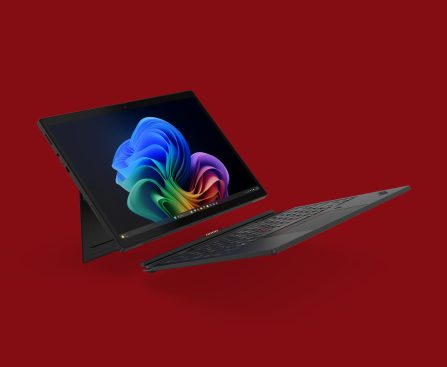
These devices enhance current technologies present in computing, hinting at future offerings from Lenovo’s Yoga, Legion, and ThinkBook laptop lines, provided that the presented innovations become market-ready. Moreover, Lenovo announced over a dozen new products at MWC 2026, such as the Legion Tab gaming tablet, the Yoga 9i 2-in-1 Aura Edition convertible laptop, the Yoga Slim 7i Aura Edition laptop, and six ThinkPad notebooks tailored for professionals, including the ThinkPad X13 Detachable.

The AI Work Companion Concept resembles a digital desk clock, but it is an AI-powered device designed to assist users throughout the day while also serving as a charging hub for devices. The AI functionalities may be particularly appealing to users who utilize AI tools for their work. Lenovo explains that the AI Work Companion Concept employs AI to synchronize with the user’s tasks and schedules across different devices to provide a daily agenda. Moreover, it will recommend work breaks to mitigate burnout and offer “playful interactions,” per Lenovo, to celebrate milestones such as task completions. This desk clock also includes customizable buttons to cater to user preferences and a display for additional content, as depicted in the image above. The AI Work Companion would likely require a connection to other computers to function, although this remains speculative.

With a similar title, the Lenovo AI Workmate Concept is another AI-driven concept introduced at MWC that aims to present users with a tangible AI assistant ready to tackle more complex tasks than the AI Work Companion. The AI Workmate resembles a desk robot (or a microphone) with a base and a body featuring a display at the top. This gadget is designed to be perpetually on, allowing users to engage with AI via voice for various tasks. Lenovo indicates that the AI Workmate will locally process AI requests and assist with multiple work activities, such as document scanning, summarization, and note organization.

The AI Workmate can aid users in crafting presentations and can even project content, serving as a secondary monitor. The device allows for various modes of interaction, including voice, gestures, writing, and spatial interaction, although the latter was not elaborated upon. Unlike the earlier AI Work Companion Concept, the AI Workmate has the potential to become a valuable desktop tool, assuming Lenovo successfully markets it.

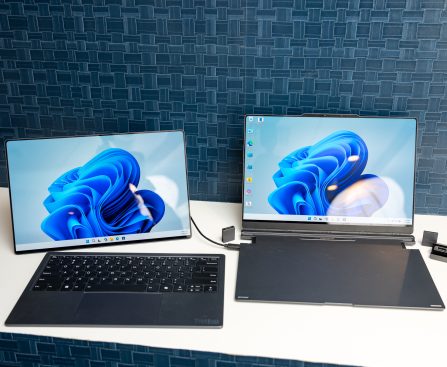
The ThinkBook Modular AI PC Concept is the type of computer that may catch the interest of a mobile professional. It boasts not one, but two displays that provide a significantly larger workspace than a standard laptop. One of the screens can be adjusted to various positions, operating as either a horizontal or vertical display mounted into a kickstand, or it can be positioned at the base of the laptop, taking the place of the detachable keyboard. The main screen of the ThinkBook measures 14 inches, matching the movable one. Together, they can create an estimated 19-inch viewing area, as stated by Lenovo.

The ports are also interchangeable, with the modular laptop accommodating USB-A, USB-C, and HDMI. Modules can connect via pogo pins, facilitating power and data transfer, according to Lenovo. As for its AI capabilities, Lenovo did not provide detailed information in its press release but noted that “AI-enabled experiences provide contextual assistance alongside primary tasks, demonstrating Lenovo’s ongoing exploration of modular, AI-driven business devices.”

Furthermore, Lenovo introduced the Lenovo Qira at the event, a Personal Ambient Intelligence solution set to be embedded in Lenovo and Motorola devices at the system level. Qira is intended to comprehend workflows and contexts across the user’s devices and provide assistance, including proactive actions. Qira is poised to begin deployment on more than 20 commercial devices within its PC lineup and appears to be the type of AI tool that the ThinkBook Modular AI PC concept could utilize if it transitions into a marketed product.

Similar to the modular laptop, the Yoga Book Pro 3D Concept also showcases two displays, but both are integrated within the laptop. The aim of the dual displays is to enable the device to create glasses-free 3D content that may benefit designers and other creators. This concept laptop operates on an Intel Core Ultra processor paired with an NVIDIA Ge.

This Foldable Screen Windows Gaming Handheld

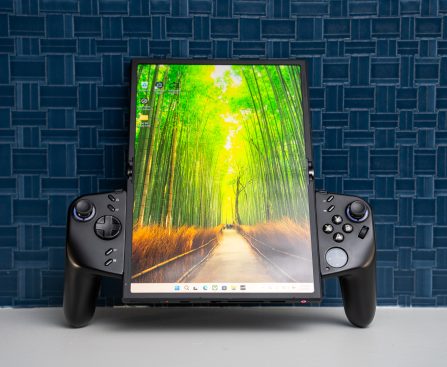
Lenovo put a foldable display on a gaming handheld. The Legion Go Fold Concept is a Windows-based handheld with a flexible POLED display, detachable Joy-Con-like controllers, and a folio case to turn the whole thing into a mini laptop. You can use it as a standard Steam Deck-esque handheld with the display folded down to […]

Lenovo Unveils a Modular Laptop with Swappable Ports and a Dual Screen

One of Lenovo’s big laptop concepts for MWC 2026 is a modular ThinkBook with two screens. Officially called the ThinkBook Modular AI PC Concept, the proof-of-concept is a 14-inch productivity machine with two plug-and-play interchangeable ports and a second 14-inch display magnetically attached to the rear of its lid. The second display is removable, and […]